
Netherlands — Europe market entry
Entering the Netherlands market
The Netherlands is compact, densely connected and logistically central to Europe. What overseas manufacturers should understand before treating it as either a destination market or a gateway.
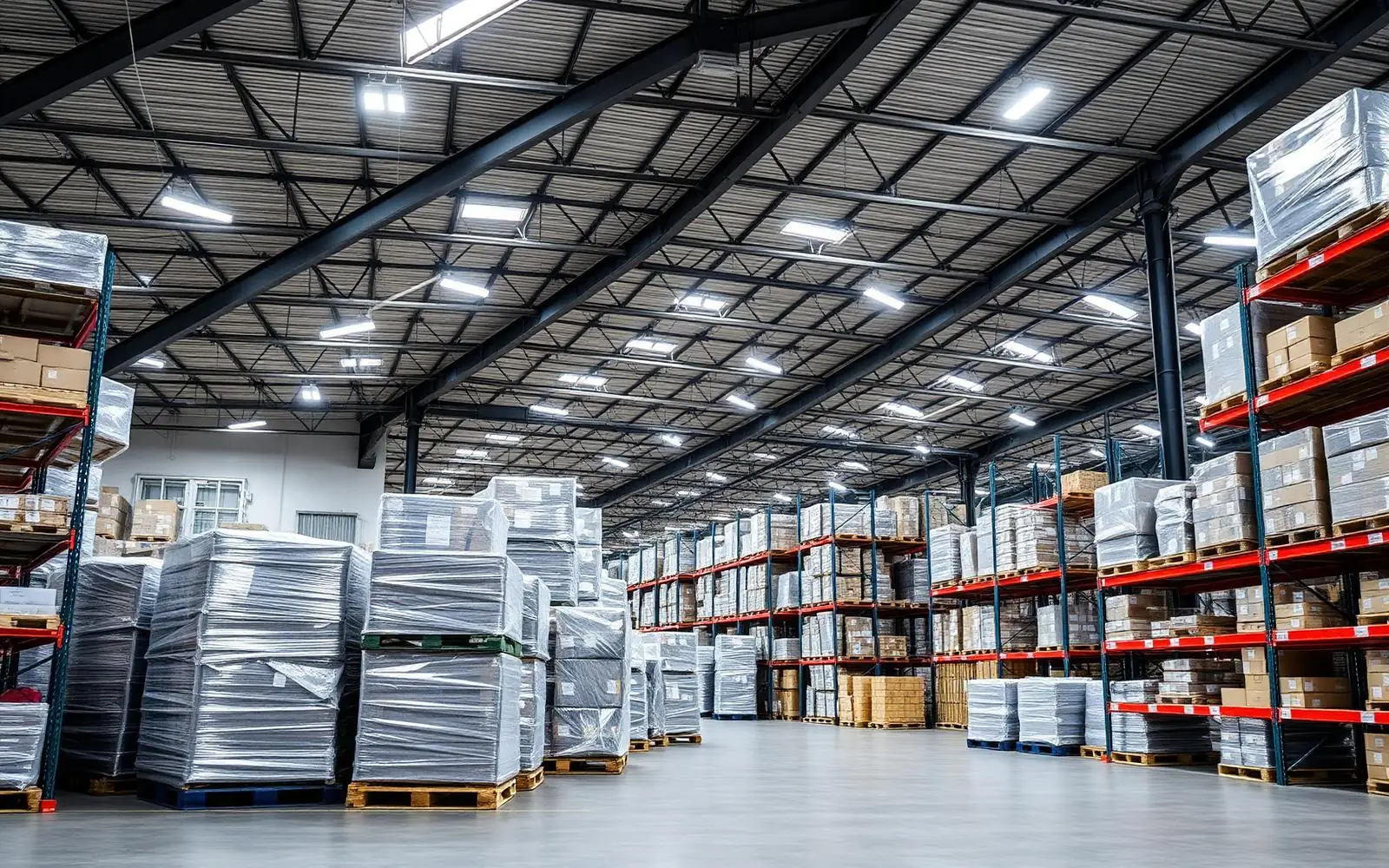
the Netherlands at a glance
- Position
- Compact, high-density economy with strong international trade orientation
- Commercial structure
- Concentrated around Randstad conurbation and major logistics corridors
- Typical entry routes
- Distributor, direct sales, or local agent depending on order size
- Language
- High English fluency, but Dutch expected in construction, public tenders and retail
- Infrastructure
- Rotterdam port and Schiphol give strong onward European logistics access
- Realistic sizing
- Smaller demand pool than Germany or France — plan volumes accordingly
In short
Most overseas manufacturers enter the Netherlands through a distributor or a small direct sales effort, helped by high English-language business fluency but still expected to produce Dutch-language material in parts of the trade, particularly construction and public-sector work. The market is small in absolute terms compared with Germany or France, but its density, logistics infrastructure and port access make it genuinely useful for businesses selling technical, construction or distribution-dependent products. It is sometimes a sensible route into wider Europe, but a Dutch partner does not automatically deliver coverage elsewhere — that has to be tested, not assumed.
The Netherlands sits in an unusual position for market entry planning. It is a serious market in its own right — wealthy, industrious, internationally minded — but it is also frequently treated as a stepping stone into Europe because of Rotterdam, Schiphol and the country's road and rail connections. Both framings are useful, and both are commonly overdone.
This hub sets out what actually matters commercially: whether the Dutch market suits your product on its own terms, how distribution and direct sales compare given the market's size, what logistics and infrastructure genuinely offer, the honest limits of using the Netherlands as a European base, and where entry commonly goes wrong. It is written for overseas manufacturers, construction and technical product businesses, and companies weighing up the Netherlands as either a destination or a launchpad.
Who is the Dutch market likely to suit?
The Netherlands suits businesses that can operate efficiently at moderate volume and that value a market where deals move relatively quickly once a proposition is understood. Dutch commercial culture tends to be direct, pragmatic and comfortable doing business in English, which lowers some of the friction overseas manufacturers hit elsewhere in Europe. That directness cuts both ways — a weak proposition tends to be told so quickly, rather than left to drift.
- Manufacturers of technical, industrial or construction products who can support a smaller but efficient market.
- Businesses whose product benefits from strong logistics and distribution infrastructure — perishables, components, building materials.
- Companies comfortable running an initial direct sales effort in English before deciding whether local language material is worth the investment.
- Businesses using a Dutch entry as one part of a wider, deliberately sequenced European plan.
It suits some businesses poorly. If your business case depends on Dutch demand alone reaching the scale of a market like Germany or France, the numbers usually will not work — the Netherlands is a fraction of the size. Businesses in that position often do better treating the country as one part of a Benelux or wider European sequence rather than a standalone target. Our guidance on choosing which European country to enter first covers that sequencing question in more depth.
How big is the opportunity, realistically?
The Netherlands has around a sixth of Germany's population and a smaller industrial base than France, concentrated heavily in and around the Randstad — the urban band running through Amsterdam, Rotterdam, The Hague and Utrecht. That density is an advantage operationally: customers, partners and trade events are close together, and a small commercial team can cover the country without the regional travel burden that larger markets require.
The trade-off is ceiling. A distributor appointment or a direct sales effort that performs well in the Netherlands will usually generate a smaller absolute order book than the same effort in Germany or France, even allowing for the market's wealth and openness. Entry plans and revenue expectations should be built on that reality rather than on the country's reputation as an easy, English-speaking market.
Direct sales or distribution?
Because the Netherlands is small and geographically compact, direct sales is a genuinely viable option for products and order values that would require a distributor almost everywhere else in Europe. A manufacturer selling higher-value technical or project-based products can often reach the relevant Dutch customer base — which may be a few dozen or a few hundred accounts — without local stockholding or a large local team.
| Route | Fits when | Main trade-off |
|---|---|---|
| Distributor | Product needs local stock, fast delivery or an established trade name | Distributors expect meaningful volume from a market with a limited ceiling |
| Direct sales | Higher-value, technical or project-led products with an identifiable customer base | Requires someone with local market knowledge, even if not full-time |
| Local agent | Relationship-led selling where an established local network shortens the path | Coverage and effort depend on one individual's capacity and focus |
Volume-line, retail and construction-supply products more often need a distributor purely for logistics and stockholding reasons, even where the direct relationship with specifiers or larger accounts is run separately. The two are not mutually exclusive.
Does language and communication style actually matter here?
English is used comfortably in Dutch business at almost every level, which is one of the reasons the Netherlands feels like a low-friction entry point. That should not be mistaken for an absence of language expectations. Public-sector tenders, construction documentation, retail packaging and a meaningful share of technical specification work are conducted in Dutch, and a supplier who cannot produce Dutch-language material when it is expected is at a real disadvantage in those specific channels, even if the sales conversation itself happens in English.
The practical approach is selective rather than blanket: assess which parts of your sales and technical documentation genuinely need to be in Dutch for the segment you are targeting, rather than assuming either that English is always sufficient or that everything needs translating from day one.
Logistics, ports and distribution structures
Rotterdam is one of Europe's largest ports and Schiphol is a major air freight hub, and the country's road and rail network is dense and efficient by European standards. For manufacturers whose product depends on reliable, fast distribution — perishable goods, components feeding just-in-time manufacturing, building materials with tight project delivery windows — that infrastructure is a real and usable advantage, not a marketing point.
Dutch distribution businesses are correspondingly sophisticated, often running pan-regional or pan-European logistics rather than purely domestic operations. That is worth knowing when evaluating a potential Dutch distributor: some genuinely can support wider regional coverage, and some cannot, regardless of what their pitch suggests. The difference has to be checked rather than assumed.
Construction and technical products
For construction and technical building products, the Dutch market runs on similar principles to elsewhere in northern Europe: certification, technical performance data and compliance with applicable standards are expected before a serious commercial conversation starts. Dutch building regulation and certification bodies operate their own frameworks, and a product accepted in the UK or another EU market is not automatically recognised without the relevant Dutch or EU conformity route being confirmed — that is a technical and, in places, a regulatory question worth checking with the relevant certification body rather than assuming.
Specification influence matters here too, though the market is small enough that a manufacturer can realistically build direct relationships with the architects, contractors and specifiers who matter for their category, rather than relying solely on a distributor to generate demand.
Using the Netherlands as a route into wider Europe
The Netherlands' location, logistics infrastructure and commercial openness make it a genuinely sensible base for some businesses looking at Europe more broadly — particularly where the product itself depends on distribution and warehousing, where the target customer base spans Benelux and neighbouring regions, or where a business wants a low-friction, English-speaking environment to run its early European operation from while it builds confidence and evidence.
It is not automatically the best European base, and that assumption causes real problems. Dutch demand for most products is smaller than German or French demand, so a Netherlands-first strategy built purely on domestic sales potential is usually starting from the wrong end. And critically, appointing a Dutch distributor or partner does not, by itself, deliver access to Germany, France or the wider region — geographic proximity is not the same as commercial reach. Some Dutch partners genuinely operate across borders; many do not, and their Dutch success says little about their capability elsewhere.
Do you need a local presence in the Netherlands?
Given the market's compact geography and the ease of doing business in English, many overseas manufacturers begin without any fixed local presence at all — running direct sales from head office with periodic visits, or working through a distributor or agent from day one. A local presence, whether a part-time representative, a small office or eventually a Dutch entity, tends to be added once demand and the shape of the customer base justify the fixed cost.
Common Netherlands market entry mistakes
- 01Sizing the opportunity as if Dutch demand matched Germany's or France's, then being disappointed by the ceiling.
- 02Assuming English fluency removes the need for Dutch-language material in construction, tender and retail channels.
- 03Appointing a distributor purely because it is based near a major port, without checking its actual customer reach.
- 04Treating the Netherlands as an automatic European gateway without testing whether a partner's reach genuinely extends beyond it.
- 05Skipping certification and technical conformity checks on the assumption that UK or other EU approval is automatically sufficient.
- 06Under-investing in specification relationships for construction and technical products, relying on distribution alone to generate demand.
How Evans Sales Consultancy can help in the Netherlands
Evans Sales Consultancy works with overseas manufacturers and technical B2B businesses on the commercial side of Dutch market entry: testing whether the opportunity justifies the investment, deciding between direct sales, distribution or a hybrid, evaluating whether a prospective partner's regional reach is real, and building pipeline rather than a plan for one.
- Market and opportunity assessment sized realistically against the Netherlands' actual scale.
- Route-to-market strategy: direct sales, distribution, agency or hybrid.
- Distributor and partner identification, including honest evaluation of claimed regional reach.
- Specification and project generation for construction and technical product categories.
- Guidance on whether and when the Netherlands makes sense as part of a wider European sequence.
- Fractional international sales leadership through the early phases of entry.
Import, export & market access considerations
The Netherlands sits inside the EU customs territory, so the customs mechanics are the EU ones described in our EU import guide. What makes the country distinctive is that it is one of Europe's principal points of entry for goods arriving from outside the EU, with major port and airport infrastructure and a dense logistics and warehousing sector built around it.
That has a direct commercial consequence for overseas manufacturers: the Netherlands is frequently chosen as the place to hold European stock and clear goods into free circulation, from where they can move to other member states without further customs duty. For many entrants the Dutch decision is therefore two decisions — whether to sell into the Dutch market, and whether to use the Netherlands as the logistics base for a wider European push. They are worth separating, because the second can be worth more than the first.
The Dutch market itself is open to overseas suppliers, English-language commercial discussion is normal and buying decisions tend to be pragmatic and quick — but they are also unusually well informed on price and availability. A supplier with European stock and short lead times competes well; one quoting from an overseas factory tends not to.
Where a warehousing or distribution arrangement is used, the questions Evans Sales Consultancy works through are commercial: who acts as importer, what the arrangement does to delivered cost and margin, and whether it strengthens or weakens the case for a Dutch distributor as opposed to direct supply.
Useful next step
Build your market entry planRelated research
UK & European Manufacturer Market Entry Report 2027Planning to enter the Netherlands?
Entering a new market requires more than a list of potential customers. Evans Sales Consultancy can help assess the opportunity, establish the right route to market and build commercial traction.
How Evans Sales Consultancy can help
Import, export & market access
Import, export & market access: Netherlands
The Netherlands is both a market and Europe's most-used entry point for imported goods. Deciding which role it plays in your plan is a commercial decision with real cost consequences.
Importing products into the EU
Customs, duty, origin, VAT, conformity and landed cost across the EU customs territory — and what they do to your commercial plan.
Insights
the Netherlands market intelligence
Building the local team and digital presence in the Netherlands
Once the route to market is settled, two things usually decide how quickly the Netherlands starts producing revenue: the people representing you there, and whether buyers in the market can find and understand you.
People
International Recruitment
Country Managers, sales leadership, business development and technical sales people recruited for the commercial task the Netherlands actually presents — informed by the market work, not a generic brief.
Digital
Market Entry Digital Infrastructure
Country pages, language, search visibility and enquiry handling built so that buyers in the Netherlands can find you, understand the proposition and get in touch.
The international commercial system
How Evans supports entry into this market.
Most businesses use only the stages they need. The route varies by product, market and the evidence gathered so far.
International Expansion
Test, build and run commercial expansion into a new market — prove the market before building the full cost base.
Explore →Build My Market Entry Plan
A personalised initial plan for your company and target market.
Explore →Distributor & Partner Search
Where distribution is the right route: finding, qualifying and introducing credible partners.
Explore →Opportunity Engine
Target accounts, projects and decision-makers in the new market — Intelligence finds them, Managed starts the conversations.
Explore →International & Commercial Recruitment
Evans helps you recruit your local team — Country Manager, Sales Director, Commercial Director, export and international sales roles.
Explore →Fractional Commercial Leadership
Evans provides the senior commercial leadership itself, before you commit to a permanent local appointment.
Explore →Market Entry Digital Infrastructure
Local credibility, market-specific positioning and enquiry routes — without a full local operation.
Explore →Recruitment or fractional leadership? With Fractional Commercial Leadership, Evans provides the leadership directly. With recruitment, Evans helps you appoint your own permanent or interim leader.
the Netherlands: common questions
Both, depending on the business. It is a genuine market in its own right for manufacturers whose product suits its scale — technical, construction and logistics-dependent products in particular. It can also be a sensible European base given its infrastructure and commercial openness, but that has to be a deliberate decision, not an assumption based on location alone.
Often, yes. The market's compact geography and high English fluency make direct sales genuinely viable for higher-value or technical products with an identifiable customer base, in a way that would require a distributor in most larger European markets. Volume-line or stock-dependent products are more likely to still need distribution for logistics reasons.
Selectively, yes. Day-to-day sales conversations often happen comfortably in English, but public tenders, construction documentation and a meaningful share of technical specification work are conducted in Dutch. Assess which channels genuinely require Dutch-language material for your specific sector rather than assuming either that English is always enough or that everything needs translating.
Not automatically. Some Dutch distributors genuinely operate across borders and can demonstrate real accounts and activity elsewhere; many operate purely domestically despite location or marketing suggesting wider reach. Ask for specific evidence of cross-border activity before assuming a Dutch appointment delivers regional coverage.
Considerably smaller in population and industrial base — the Netherlands has roughly a sixth of Germany's population. Its density and infrastructure make it efficient to operate in, but revenue expectations and partner sizing should reflect its actual scale rather than its reputation as an easy entry point.
Not usually at the outset. Many overseas manufacturers trade into the Netherlands through direct export, a distributor or an agent before establishing any local entity. Whether and when to incorporate locally is a legal, tax and employment question that needs qualified professional advice.
Yes, where your product depends on fast, reliable distribution — perishables, components feeding just-in-time production, or construction materials with tight delivery windows. For products without that dependency, the infrastructure is a convenience rather than a commercial differentiator, and should not be overweighted in the market-entry decision.
Still working out the right approach?
If your question is specific to your company, product or target market, we can help you work through the commercial options.
Discuss Netherlands market entryRelated markets
Explore other markets
Most expansion decisions involve comparing markets. Explore the neighbouring territories most often considered alongside this one.
Ready to build the Dutch market?
Route to market, partner selection and the business development behind a compact, fast-moving market.
Prefer to speak directly?
Playbooks & frameworks
How market entry actually gets built
The playbook sets out the twenty stages behind an entry of this kind, from choosing the market through to first customers, recruitment timing and the point at which stopping is the right call.
Explore the International Expansion PlaybookEvans Opportunity Engine
Looking for live opportunities in the Netherlands?
The Opportunity Engine can research and monitor commercial triggers within your target geography — investment, projects, contracts, appointments and partner searches — and identify who to approach and why. Evans is UK based and carries out the research from the UK.
From £695 + VAT / month
Evans Authority Content Engine
Building credibility with buyers in the Netherlands
Once the core market architecture is in place, an ongoing authority programme can build local credibility around the questions buyers in that market actually ask — in their language, on their terms. Language and market scope are agreed separately from the standard programme.
From £995 + VAT / month
Evans International SEO & Localisation Pack
Entering the Netherlands? Don't just translate the website.
If the existing website is commercially sound, the Localisation Pack adapts the core commercial pages for the Netherlands — how buyers there actually search, native commercial copy, localised URLs, hreflang, canonicals and local enquiry forms. Language scope is agreed before work starts.
£2,995 + VAT · one market, one language, up to 10 pages
Distributor & Partner Search
Looking for distributors or commercial partners in the Netherlands?
Distributor & Partner Search researches how your category is actually distributed in the Netherlands, identifies the credible candidates, checks competitor conflicts and prioritises who is worth approaching first — in a written Evans intelligence report. £1,950 + VAT, fixed fee, one market.
£1,950 + VAT · fixed fee, one market
Evans Market-Entry Landing Estate
Entering the Netherlands? Need more than a translated website?
Evans can build a dedicated the Netherlands commercial estate around your products, sectors, local search intent and buyer journeys — proposition, service and sector pages, proof, partner routes and enquiry architecture. From £4,995 + VAT, fixed project.
From £4,995 + VAT · fixed project, one market
Start here
Considering this market but not ready for a full market-entry programme?
Start with the Commercial Growth Sprint — a fixed-fee commercial review of market fit, route to market, commercial priorities, digital and recruitment requirements and the first 90 days.