
Insights — UK Market Entry — 6 min read
How to Get Your Products Specified by UK Architects and Consultants
Being specified is not the same as being ordered. Understanding that gap is where most specification strategies for overseas manufacturers go wrong.
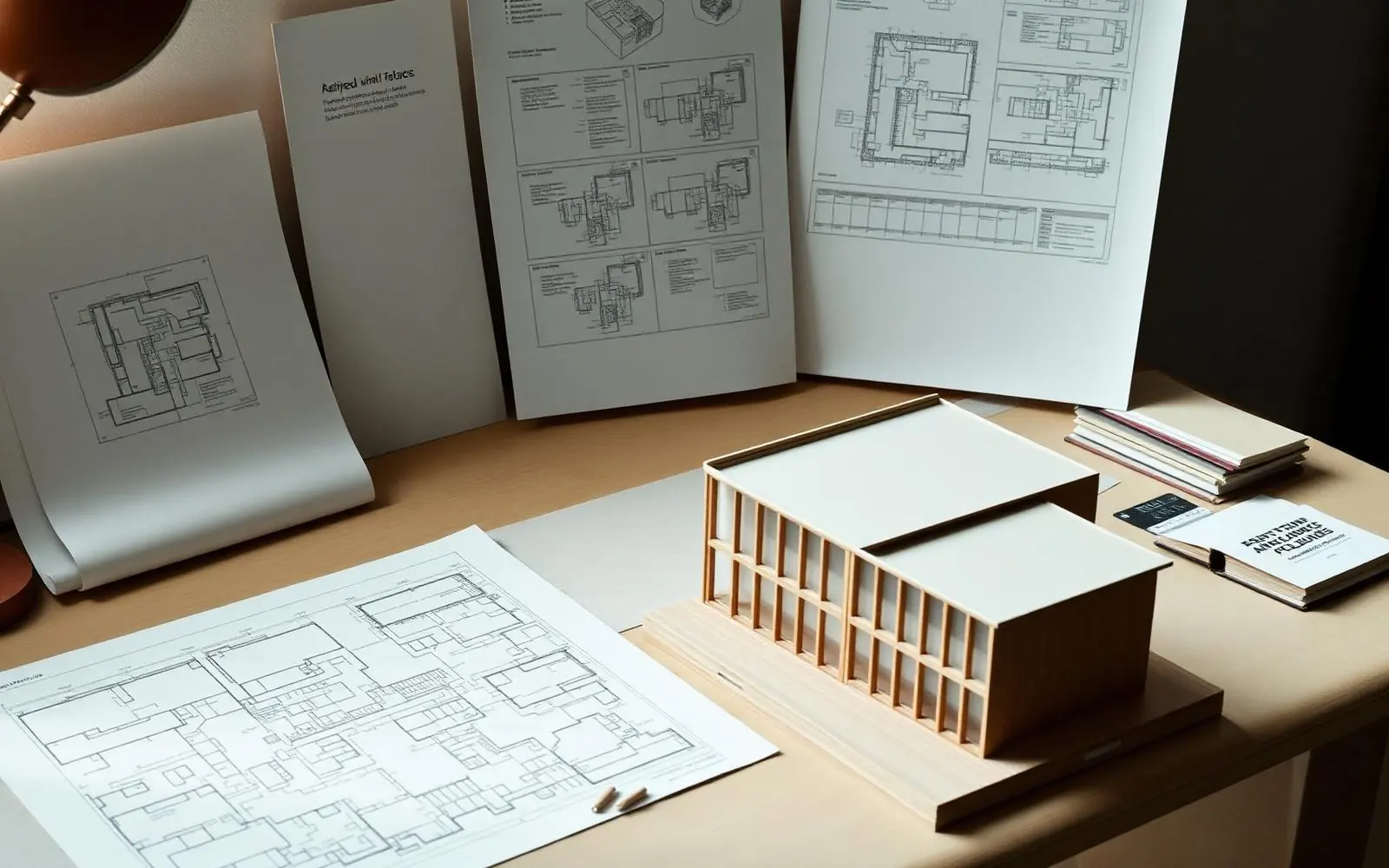
Specification selling means getting your product named, or your performance criteria written, into the design of a project before it ever reaches a contractor or a merchant. For overseas manufacturers, it's often the single most valuable and least understood part of entering UK construction.
It's also frequently misunderstood as a marketing exercise — get on a database, send some literature, hope for the best. Genuine specification influence is a relationship-based, technically credible process that happens well before most manufacturers start paying attention to a project.
What specification selling actually means
Specification is the point in a project's life where the design team decides what will be used — sometimes by naming a specific manufacturer's product, more often by writing a performance specification that some products meet and others don't. Influence that specification, and you shape which products even get considered by the time contractors are pricing the job. Miss it, and you're competing after the decision has effectively already been made, on price alone, against whatever was actually specified.
Named specification versus performance specification
It matters which kind of specification you're aiming for, because the commercial work required is different. A named specification states your product or an explicit equivalent — the strongest position, because substitution requires the contractor to prove genuine equivalence, which raises the bar for anyone trying to displace you. A performance specification instead lists criteria — strength, fire rating, thermal performance, acoustic rating — that any compliant product can meet, leaving the field open to whichever supplier can evidence compliance at the best price. Getting named is more valuable but harder to achieve for an unfamiliar brand; getting your genuine performance characteristics reflected accurately in the performance criteria is a realistic and still valuable intermediate goal, particularly early in a UK presence.
Why upstream influence matters so much
By the time a main contractor is pricing a project, most of the meaningful product decisions have already been narrowed down. Trying to sell a building product at tender stage, with no prior design-team relationship or awareness, means competing purely on price against whatever the specification already favours. Getting involved upstream — while the design is still being developed — is what gives an unfamiliar or overseas brand a genuine route into projects rather than a permanent uphill battle at the pricing stage.
Identifying relevant practices
Not all architectural and consulting practices are equivalent targets. Large multidisciplinary practices work on bigger, longer projects with more layers of decision-making; smaller practices may move faster and give more direct access to the actual decision-maker. Structural, façade, and building services consultants each influence different parts of a building, and a product that's relevant to one may be irrelevant to another. Understanding which practice types and which individuals within them actually make the relevant product decisions is foundational — and it's a different answer for every product category.
Practice types and how they behave
Large multidisciplinary practices tend to have layered decision-making — a project architect who owns day-to-day design decisions, a technical or associate director who signs off on specification risk, and sometimes a separate sustainability or technical team with its own influence over material choices. Winning here usually means being useful to more than one of these people over time. Smaller or boutique practices often concentrate decision-making in one or two named individuals, which can mean faster relationship-building but also means the relationship is more fragile — if that individual moves on, the relationship effectively has to be rebuilt. Technical consultancies (structural, façade, fire, acoustics) tend to specify on performance criteria rather than brand loyalty, so the priority there is having credible, current technical data rather than relationship warmth alone.
What design teams actually need from you
- Technical information that answers real design and compliance questions, not marketing material dressed up as data
- Clear evidence of product suitability for the specific application, not just general performance claims
- CPD sessions, where genuinely relevant, that build knowledge rather than functioning as a thinly disguised sales pitch
- Samples that let a design team assess the product directly
- Responsive project support once a project is live and questions or issues arise
Consultants and architects are wary of being sold to. What earns trust is being a genuinely useful technical resource over time, so that when a relevant project comes up, your product is a natural, credible answer to a real design problem rather than an unfamiliar name being pushed at them.
Using CPDs and samples well
A CPD session is a genuine opportunity to build credibility, but only if it's built around a real technical topic — a design challenge, a regulatory change, a comparison of approaches — with your product appearing as a natural example rather than the entire subject of the session. Architects sit through a great deal of thinly disguised sales content disguised as CPD, and a session that respects their time and knowledge is remembered for the right reasons. Samples matter for similar reasons: a sample that lets a design team properly assess finish, tolerance or performance builds more trust than any brochure, but sending samples speculatively and unprompted, with no follow-up conversation, rarely leads anywhere.
What good specification activity looks like over a year
A credible specification programme run over a year typically shows a mix of stages in progress at once: several practices where the relationship is still being established, a smaller number where you've had genuine technical engagement on a live project, and, further along, projects where you know you've been named or performance-matched and are tracking them through to tender. A programme that only shows relationship-building activity with nothing progressing toward a real project after a sustained period is a signal to review the targeting or the offer, not just to keep going and hope it converts.
The gap between being specified and receiving an order
This is the part overseas manufacturers most often underestimate. Being written into a specification does not guarantee your product ends up on site. Contractors look for cost savings during value engineering, procurement teams may substitute a 'similar or equal' product, and a specification with no active protection behind it can quietly disappear between design and construction.
Being specified gets you into the conversation. Staying specified is a separate piece of work, and it's the part most overseas manufacturers stop doing too soon.
Protecting the specification downstream
Once a product is specified, the relationship needs to continue through tender and construction — staying visible to the contractor pricing the job, being available to answer substitution queries, and maintaining contact with the design team who can push back if an equivalent is proposed. This is a long project lifecycle, often running well over a year from first design conversation to product installed on site, and it requires sustained relationship management rather than a single successful pitch.
Common mistakes
- Treating specification as a one-off pitch rather than an ongoing relationship across the project lifecycle
- Approaching design teams with sales material instead of genuinely useful technical information
- Assuming a specification win means the order is secured
- Having no presence or response mechanism during the contractor and procurement stages when substitution risk is highest
- Targeting the wrong practices or the wrong individuals within them for the product category
The senior decision
Specification is one of the slowest but most durable routes into UK construction for an overseas manufacturer — it builds a reputation and a pipeline that outlasts any single project. It needs patience, technical credibility, and consistent senior commercial attention across a project lifecycle that can run well beyond a typical sales cycle in other sectors.
Conclusion
Getting products specified by UK architects and consultants is a long-cycle, relationship-driven and technically demanding piece of commercial work, not a marketing task that can be outsourced to a mailing list. It rewards manufacturers who show up as a genuine technical resource, understand which practices and individuals actually decide, and stay engaged through tender and construction rather than treating a specification win as the end of the job. Done properly, it builds a pipeline of influence across many projects that a purely transactional approach to UK construction can never replicate.
Useful next step
Build your market entry planRelated research
UK & European Manufacturer Market Entry Report 2027Want your products specified in the UK?
Specification strategy and upstream relationship development with architects, consultants and design teams.
Explore the United Kingdom market
A mature, English-language market that rewards a clear route to market and specification credibility.